How to Read an Olive Oil Lab Analysis and LOT Number
An olive oil lab analysis lists a few measured values, from acidity to K values. We explain each line, the extra virgin limits and what the LOT number leads to.

Quick answer: An olive oil lab analysis is a short report with measured values for one oil sample: free acidity, peroxide value, K232, K268 or K270, delta-K and, on some reports, polyphenols in mg/kg. For extra virgin, the IOC standard sets limits such as acidity of 0.80% or less and peroxide value of 20.0 or less. The LOT on the tin leads you to the analysis behind that batch.
Most buyers never see one of these reports, and the numbers on them do not explain themselves. This guide goes line by line through an olive oil lab analysis: what each value measures, which limits apply, what a report cannot tell you and how a LOT number connects a tin to its report.
Key takeaways
- A lab analysis lists measurements for one sample of oil, with the lab, the method and the report date.
- Acidity, peroxide value and the UV readings (K232, K268 or K270, delta-K) show how well the oil was made and kept. They say nothing about taste.
- The IOC sets one limit per line for extra virgin. Read each value against its own limit, and never one number alone.
- A LOT is a code for a bottling run. Several LOTs can share one analysis, so check the report date and the lab as well.
What is an olive oil lab analysis?
A lab analysis is a report in which a lab measures a sample of the oil with set methods and prints the results. It names the lab, the report date, the method for each value and the product the sample came from.
The report covers chemistry only. Whether an oil counts as extra virgin also depends on a sensory panel, which smells and tastes the oil for defects, so the two work together. For more on the grades, read what extra virgin olive oil means.
How do you read each line of an olive oil lab analysis?
Reports differ, and the lines a report prints depend on the lab and on what was ordered. These are the ones you will meet most often.
- Free acidity is the share of free fatty acids, given as oleic acid in % (grams per 100 grams). It rises when olives are bruised or wait too long before milling. Our guide to olive oil acidity goes deeper.
- Peroxide value is the first stage of oxidation, in milliequivalents of active oxygen per kg. It rises with air, light and heat.
- K232 is an ultraviolet reading at 232 nm that picks up early oxidation. It has no unit.
- K268 or K270 is an ultraviolet reading of later oxidation. The IOC names 268 nm in iso-octane and 270 nm in cyclohexane, so some labs print K268 and others K270. Read the name the report uses.
- Delta-K is an ultraviolet check for signs of refining.
- Polyphenols are natural compounds of the olive. A lab reports them in mg/kg, and the figure depends on the method and the name on the report, such as the compound it is expressed as. Compare two polyphenol numbers only when the method matches.
Which limits apply to extra virgin olive oil?
The International Olive Council (IOC) publishes the international trade standard for olive oil. For extra virgin olive oil it sets these limits (Rev. 22, June 2026):
- Free acidity: not more than 0.80 g per 100 g
- Peroxide value: 20.0 or less
- K268 or K270: 0.22 or less
- Delta-K: 0.01 or less
- K232: 2.50 or less (the IOC lists this one as optional for commercial partners)
The US grade standard of the USDA uses the same acidity limit for U.S. Extra Virgin Olive Oil: not more than 0.8 g per 100 g of free fatty acid. The limits are ceilings. A value far below its ceiling does not make an oil better than one near it, and an oil must meet every line, plus the panel, to carry the name.
Why is one number never enough?
Acidity is the number most people know, and it is easy to print on a label. Alone it tells you little: a low figure can sit next to a high peroxide value or a bad UV reading. That is why we read the whole report, not the headline number.
A 2011 study by the UC Davis Olive Center tested extra virgin oils sold in California. All samples passed the IOC chemistry for free fatty acids and peroxide value, while several imported samples failed the IOC ultraviolet tests.
What does a LOT number tell you?
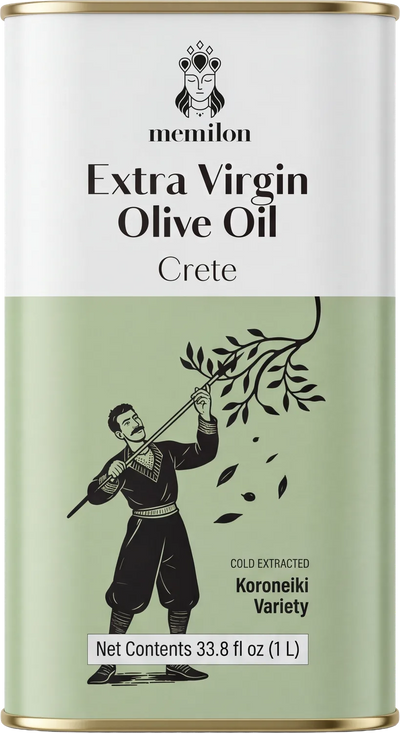
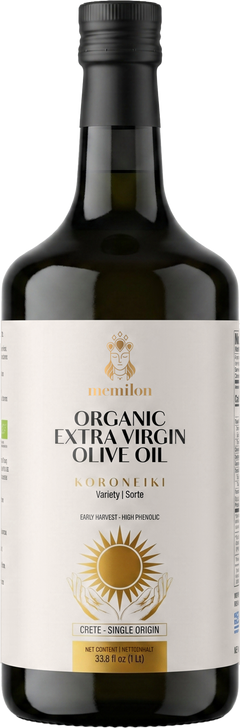
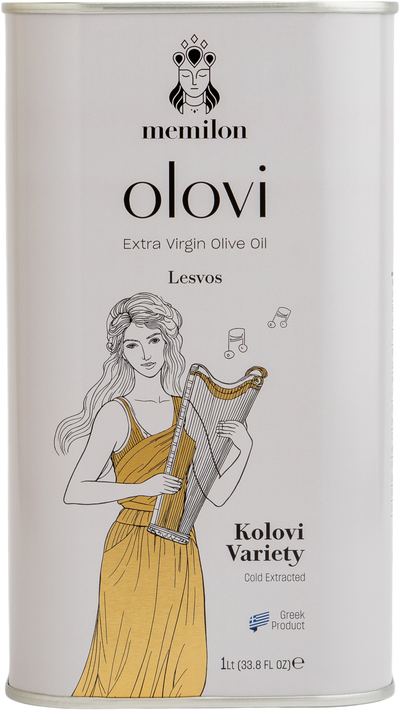
A LOT is the code printed on the tin. It stands for a bottling run. On a Memilon tin you usually find it on the top, and on the back label of a bottle. We do not ask you to decode the digits. The LOT lookup does it: enter the LOT on your tin and it shows that batch's analysis, with the olive variety, region, harvest and bottling dates, acidity, K values, polyphenols, the lab, the report date and the full lab report.
A LOT marks a bottling day, while the lab analyses the oil of a harvest. Several LOTs can therefore point to the same analysis, which is why the report date and the lab name matter as much as the values.
How do you read the analysis before you buy?
Before purchase, we show our thresholds, which are the selection rules we apply to each oil. We select Crete for acidity up to 0.3% and polyphenols from 700 mg/kg, BIO Crete for acidity up to 0.25% and polyphenols from 1100 mg/kg, and Lesvos for acidity up to 0.3% and polyphenols from 600 mg/kg. Read our published lab analyses to see the values, the lab and the report date on the reports themselves.
- Open our published lab analyses and find the oil you are looking at.
- Check that the lab and the report date are printed next to the values.
- Match each value with its own limit, line by line.
- Open the full report if you want the method behind a value.
Our oils are Memilon Crete, Memilon BIO Crete and Memilon Lesvos. You can see all three at all Greek olive oils.
What can a lab analysis not tell you?
- How the oil tastes. That is the panel's job.
- How fresh the oil is in your kitchen today. Light, heat and air change it after bottling, see how long olive oil lasts.
- Whether the tin in your hand holds that oil. The LOT on the tin is how you connect the two.
For more on reading a label and spotting oil that falls short, see our guide to how to spot a truly great extra virgin olive oil.
FAQ
How can you tell if olive oil is 100% real?
No kitchen trick is reliable. Look for the category on the label, a clear origin and a lab analysis you can read, with the lab, the method and the report date printed. An oil that shows only an adjective gives you nothing to check.
Can I use olive oil that is two years past its date?
The best before date is a quality date, and many oils carry one about two years after bottling. After that, the oil can taste flat or stale. Smell it and taste a drop: if it is musty, waxy or like old crayons, do not use it.
Do you refrigerate olive oil after opening?
You do not need to. A cool, dark cupboard away from the stove is enough, with the cap closed. In the fridge the oil turns cloudy and thick, which is harmless but awkward to pour.
What does K232 mean on an olive oil report?
K232 is an ultraviolet reading at 232 nm that picks up early oxidation. It has no unit. For extra virgin, the IOC lists a limit of 2.50, as an optional line for commercial partners.
Sources
- International Olive Council, Trade standard applying to olive oils and olive-pomace oils (COI/T.15/NC No 3, Rev. 22, June 2026)
- USDA Agricultural Marketing Service, Olive Oil and Olive-Pomace Oil Grades and Standards
- UC Davis Olive Center, Evaluation of Extra-Virgin Olive Oil Sold in California (2011)
This article gives general information about olive oil lab reports. Limits can change, so check the current standard.
Keep Reading
What Does Extra Virgin Olive Oil Mean? The EU Rules Explained
Extra virgin is the top EU grade of olive oil. We explain the limits, how it differs from virgin oil, and what...
Read the article
Olive Oil vs Rapeseed Oil: Which Fits Your Kitchen?
Olive oil vs rapeseed oil compared on fat profile, cooking and taste, with USDA data and our published lab analyses.
Read the article
Cold Pressed vs Cold Extracted Olive Oil: The Label Explained
“First cold pressing” on a label means a first pressing with hydraulic presses below 27 °C. Here is what the EU rules...
Read the article