
How Our Greek Olive Oil Is Made, Step by Step
From the sack on a picker’s shoulder to the sealed tin in your kitchen, every stage protects one thing: the juice that came out of the fruit. Cold extraction below 27°C (80°F), IFS-certified facilities, nitrogen bottling, laboratory testing on every batch, and packaging built to keep light out.


From Harvest to Bottle, Stage by Stage
Discover the complete production story of our olive oil — the same sequence, every harvest, on both islands.

Hand-Picking in Traditional Sacks
The harvest window runs from early November to early December, and every olive comes off the tree by hand into a traditional sack. It is slower and it costs more, but the fruit arrives at the mill unbruised — and unbruised fruit is where a low acidity number actually starts.
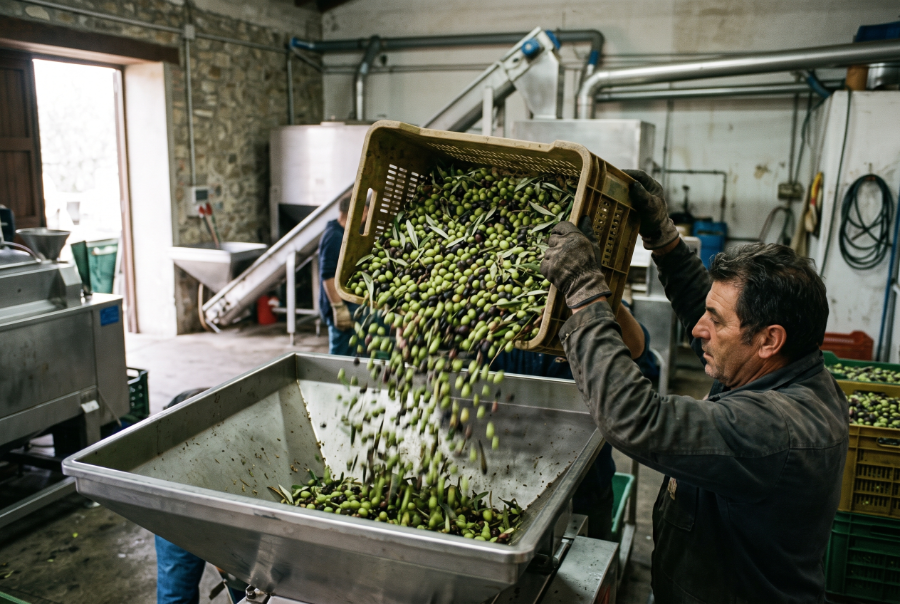
Immediate Pressing
Olives go to the press within hours of leaving the tree. The fresher the fruit, the juicier the oil: every hour between picking and pressing costs aroma, polyphenols and freshness that no later step can put back.

Cold Rinse and Slow Malaxation
The fruit is rinsed in cold water, then the paste is kneaded slowly — malaxation — at a temperature held below 27°C (80°F). Slow and cool is what keeps the juice tasting like the fruit rather than like a process.
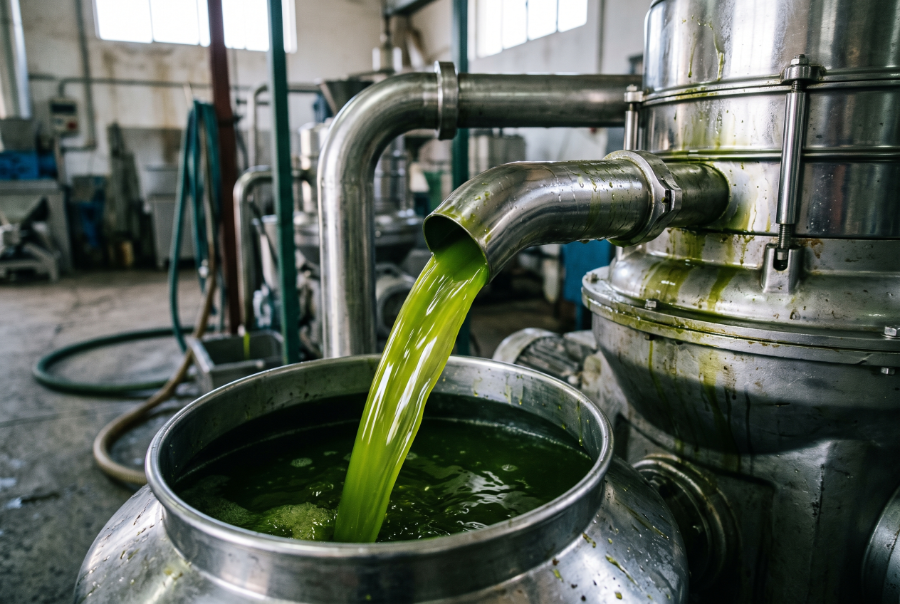
Cold Separation, No Heat
Separation is done by natural centrifugation with no added heat and no chemical assistance. What comes out is olive juice, unaltered — which is the only definition of extra virgin we are interested in.
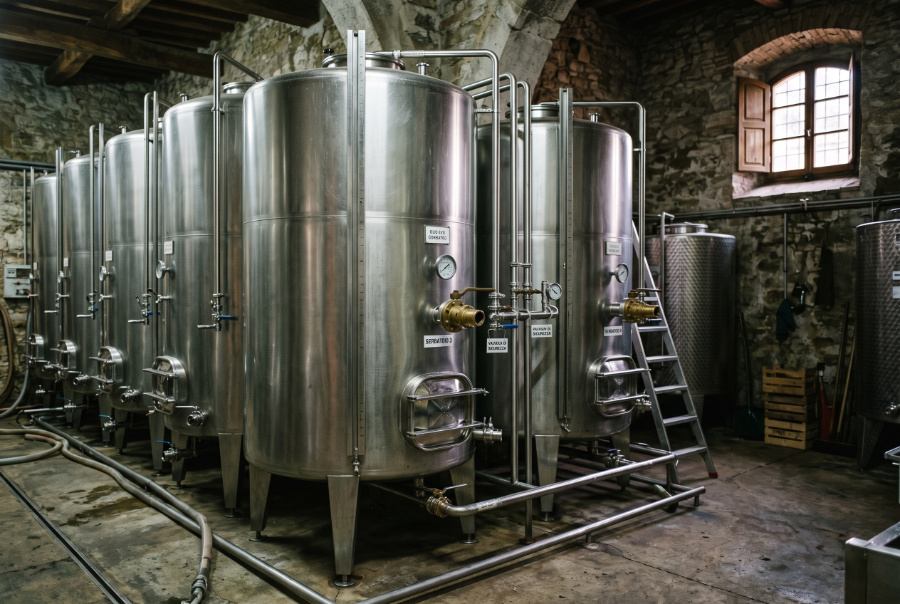
Rested Under Nitrogen
Between pressing and bottling, the oil rests in stainless steel tanks filled with nitrogen instead of air. Oxygen is the enemy of a fresh oil, so we simply remove it from the equation.

Light-Proof Bottling
We fill into dark glass bottles and food-grade tin cans with non-refillable pourers, then ship in a reinforced carton. Light and refilling are two of the most common ways a good oil is ruined after it leaves the mill.

IFS Food Certification
Our mill and bottling line are audited against the IFS Food standard — the food safety and quality benchmark used across European retail. It governs hygiene, traceability, process control and record-keeping, and it is the reason we can tie any bottle back to its batch without guesswork.
See all awards & certifications →Before Purchasing, You Can Access Its Full Analysis
Olive variety, harvest date, acidity, K values, region and bottling date — everything is published before you choose. Once it arrives, use the LOT number on the container to confirm that the olive oil you received matches the one we promised. Real transparency, from grove to glass.
Check Your Olive Oil Analysis
Enter the LOT number printed on your container to confirm that the oil you received is exactly the batch we promised — variety, region, harvest and bottling dates, acidity, K-values and polyphenols, plus the lab that tested it.
Can't find your LOT? Contact us directly.
We could not find that LOT number. Check the print on the neck label or base of the tin, or contact us and we will look it up for you.


